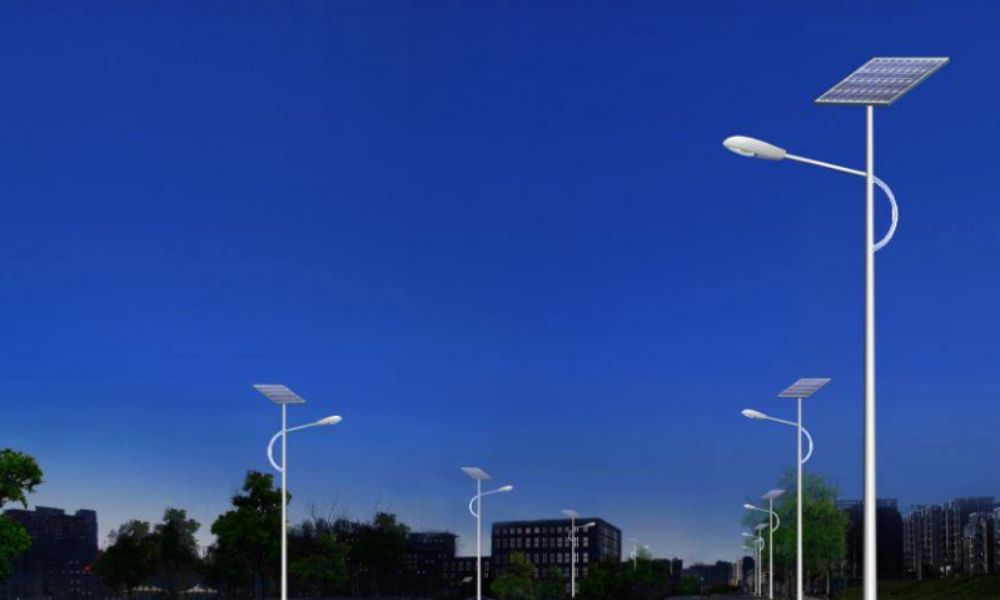
The reason lithium-powered solar street lights can last this long is because they store the solar energy collected by the photovoltaic panels and convert it into stable lighting output through an efficient battery management system. When the battery capacity and panel configuration are properly matched, the entire lighting system can maintain long-term operation even during periods of low sunlight. To maximize performance in rainy weather, choosing the right battery type is essential.
In today's market, manufacturers generally use two main battery configurations. Split-type solar street lights often use lead-acid batteries that are installed on the pole or buried underground in a protective battery box. Integrated or semi-integrated solar street lights use compact lithium batteries mounted behind the solar panel. Although both types are commonly used, lithium batteries are becoming the preferred choice due to their performance advantages.
Compared to lead-acid batteries, lithium batteries have a higher voltage platform (above 3V compared to 2V), offering stronger efficiency and a more stable discharge curve. Lithium iron phosphate (LiFePO₄) batteries are especially known for their safety and long lifespan. Lithium batteries are also more environmentally friendly, while lead-acid batteries contain heavy metals that can cause pollution. In actual lighting performance, lithium batteries can release around 30% more usable energy under high-current discharge, significantly improving rainy-day backup capacity.
Another key factor behind the long working duration is the intelligent power management within the solar lighting system. High-quality lithium battery solar street lights can automatically adjust LED brightness based on environmental light levels, effectively conserving power at night or during prolonged cloudy weather. The controller also distributes energy between lighting and storage in a smart way, ensuring the battery is charged efficiently on sunny days and discharged steadily on rainy days. Combined with high-efficiency LED chips, the system can maintain excellent brightness while using minimal energy.
With proper configuration, lithium battery solar street lights are capable of delivering up to seven consecutive days of illumination even when there is little or no sunlight. Basic systems may last 2–4 days, mid-range models typically support 4–5 days, while premium lithium-powered systems provide the best performance at 6–7 days during continuous cloudy or rainy conditions.
In summary, the key to achieving long rainy-day backup lies in selecting quality lithium batteries, ensuring suitable battery capacity, and choosing a well-designed solar panel and LED system.
 admin
admin